 Italian Government





Daylight Saving Time: From World War I to Our Daily Lives
On the night between Saturday, March 28, and Sunday, March 29, daylight saving time returns: the clocks must be set forward one hour.


 Immagini messe a disposizione con licenza
CC BY-NC-SA 4.0 DEED
Did you know that many of the customs we now consider normal have origins tied to dramatic moments in history? One of these is daylight saving time: moving the clocks forward one hour in the spring, switching from standard time to daylight saving time, to reduce energy costs and make the most of natural light.
The idea of daylight saving time dates back to the 18th century and bears the signature of Benjamin Franklin, an American scientist and politician who had previously invented the lightning rod. In 1784, he proposed moving the clock forward to save on candles and make better use of sunlight; however, at the time, the proposal went unheeded.
It was only during World War I, as coal became increasingly scarce, that German authorities decided to adopt the measure to reduce consumption related to lighting and heating. Thus, on April 30, 1916, at 11:00 p.m., clocks were moved forward by one hour for the first time in modern history.
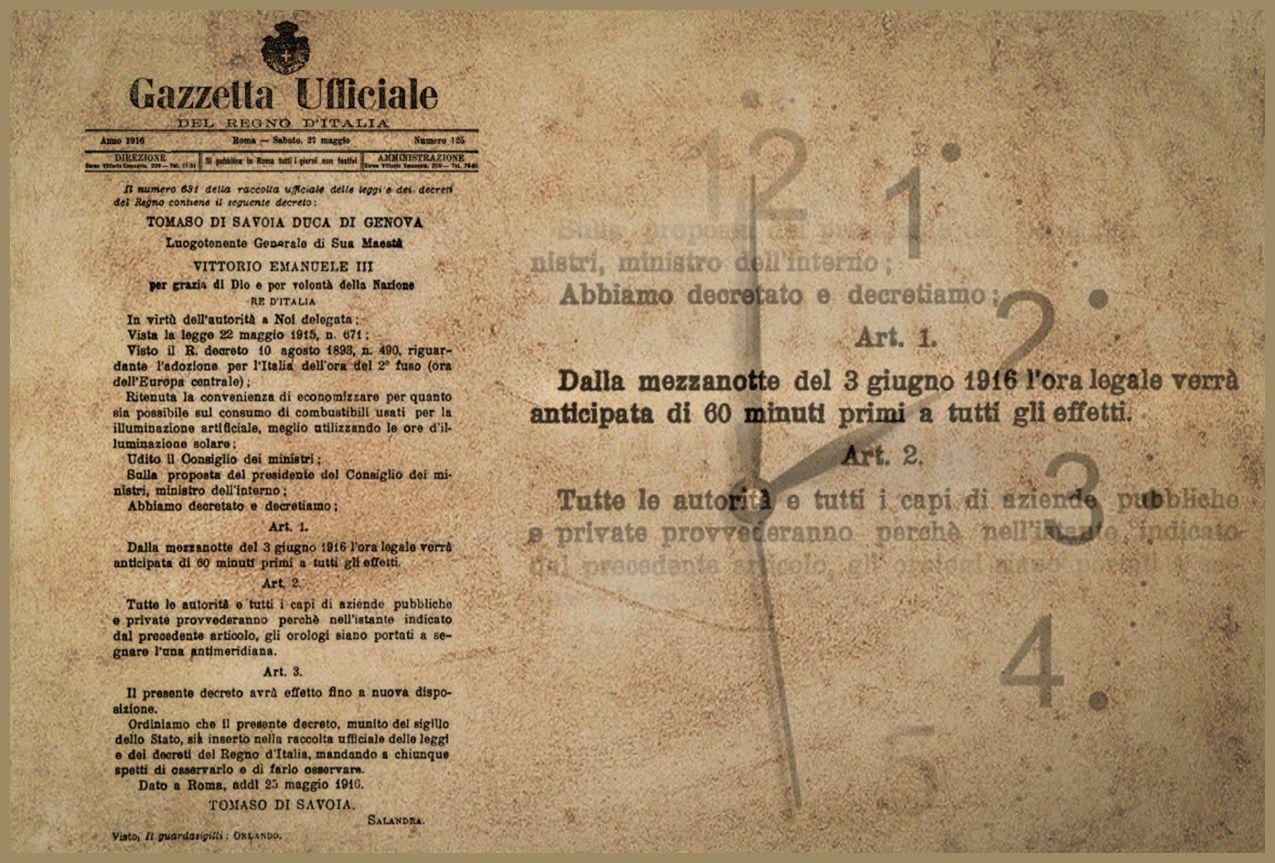
Shortly thereafter, Great Britain followed suit, and the rest of Europe and the United States soon did the same. In Italy, daylight saving time went into effect for the first time on June 3, 1916.
A measure born of wartime necessity that, over time, has become a cornerstone of our energy management and daily lives.


